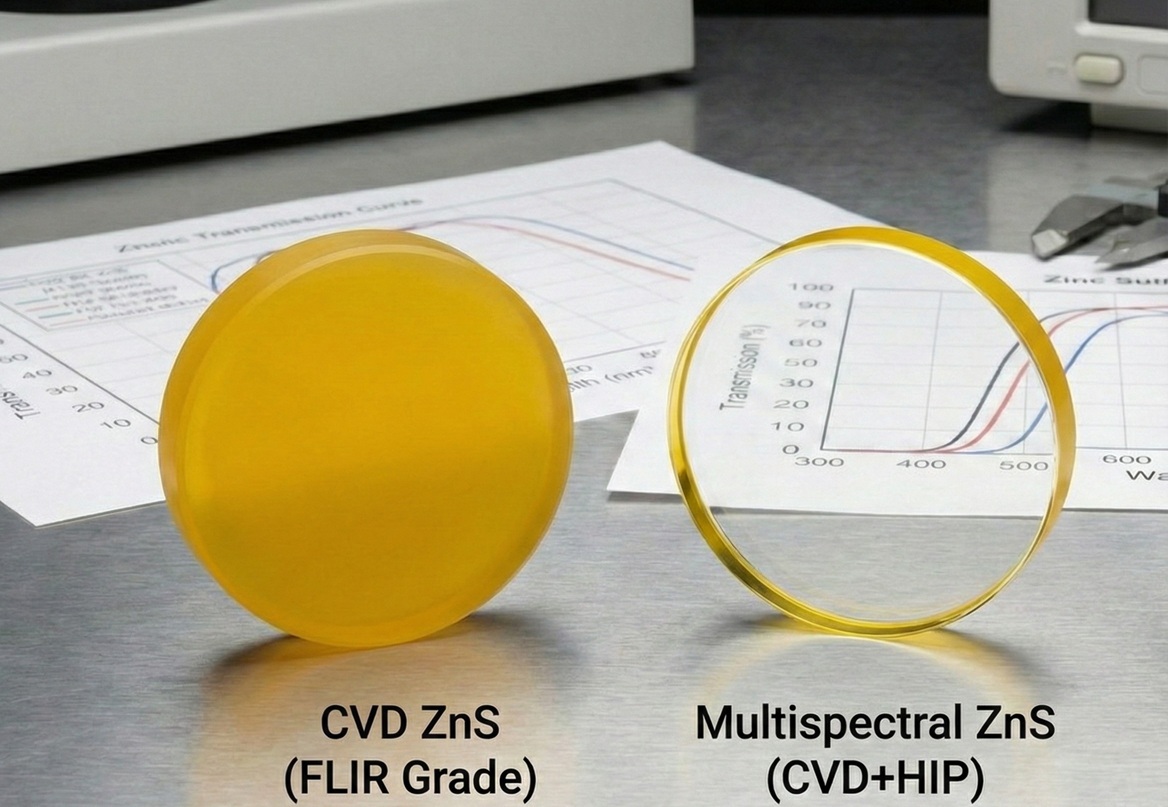
Zinc Sulfide (ZnS) is the backbone of the infrared (IR) optics industry. Whether it’s protecting a heat-seeking missile or acting as the “eye” for an industrial thermography camera, this material handles thermal and mechanical stresses that would shatter standard glass.
At MostOptics, we specialize in the precision manufacturing and processing of ZnS. However, not all ZnS is created equal. The manufacturing method determines whether the final product is a rugged, opaque FLIR-grade window or a crystal-clear Multispectral lens.
If you are designing an optical system, understanding these processes is vital for balancing performance and cost.
1. Hot Pressing (HP): The Cost-Effective Workhorse
Hot Pressing is a powder metallurgy technique primarily used for high-durability, cost-sensitive applications.
- The Process: High-purity ZnS powder is placed into a graphite die. Under temperatures ranging from to and intense uniaxial pressure, the particles fuse into a solid polycrystalline block.
- The Result: Often called Regular Grade or HP-ZnS.
- Best For: Large-scale production of simple geometries, such as flat windows or thick blanks, where extreme visible clarity is secondary to IR performance.
- The Trade-off: Residual porosity often limits transmission in shorter wavelengths, giving the material a cloudy appearance.
2. Chemical Vapor Deposition (CVD): The Industry Standard
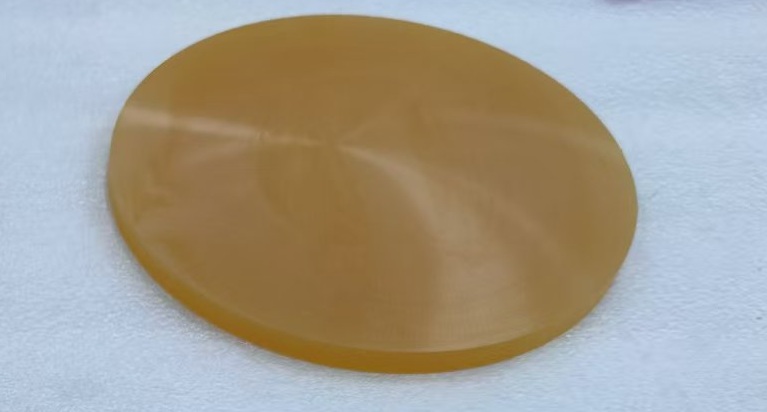
For high-performance IR optics, CVD is the gold standard. Instead of fusing powder, the material is “grown” at the molecular level.
- The Process: Zinc vapor () and Hydrogen Sulfide gas () are introduced into a vacuum furnace. They react on a heated substrate to grow the material atom by atom:
- The Result: This produces FLIR-grade ZnS, identifiable by its yellow-to-orange tint.
- Best For: Tactical FLIR systems and environments where rain erosion and high-speed flight are factors. It is highly transparent in the (Long-Wave IR) band.
3. CVD + Hot Isostatic Pressing (HIP): The “Multispectral” King
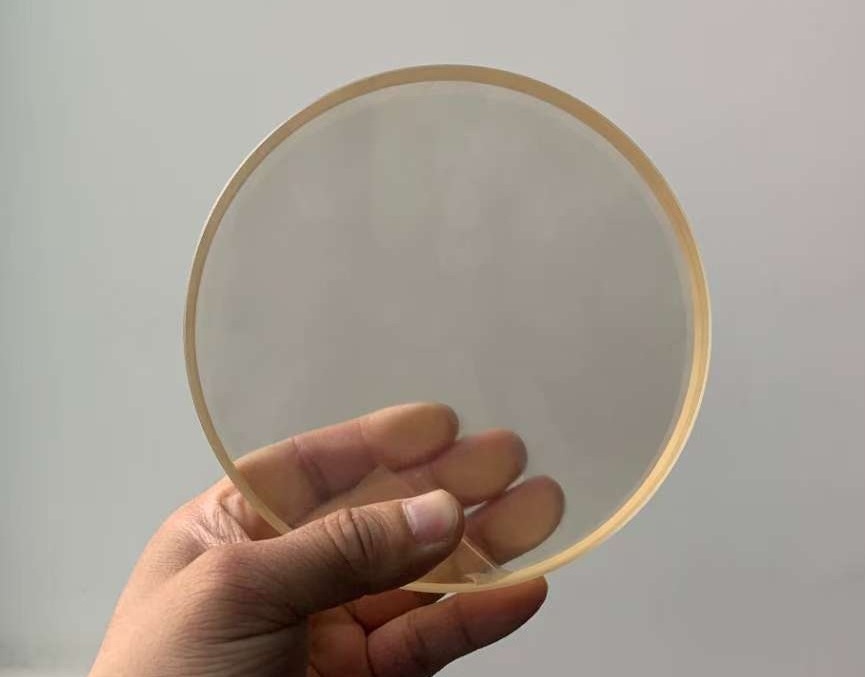
When a system requires transparency across both visible and infrared spectrums, standard CVD isn’t enough. Enter CVD + HIP.
- The Process: Standard CVD ZnS undergoes a secondary treatment called Hot Isostatic Pressing (HIP). The material is subjected to massive pressure (up to ) and heat in an inert gas environment.
- The Result: The HIP process “heals” microscopic voids in the crystal lattice. The material transforms from a cloudy orange to being water-clear, known as Multispectral ZnS or Cleartran.
- The Trade-off: While it gains visible clarity (), it is slightly softer and has lower fracture toughness than standard CVD grade.
Why Choose MostOptics for ZnS Processing?
Processing ZnS requires a delicate balance of thermodynamics and mechanical engineering. MostOptics is one of the few facilities equipped to handle all three methods under one roof.
- Versatility: Whether you need a low-cost Hot Pressed window or a high-end Multispectral dome, we have the machinery to deliver.
- Precision: Our in-house CVD furnaces and HIP chambers allow us to control the grain size and purity of every batch.
- Testing: Every optic undergoes rigorous spectral analysis to ensure it meets your specific transmission requirements.
ZnS Processing Comparison Table
| Feature | Hot Pressed (HP) | Standard CVD | CVD + HIP (Multispectral) |
| Visual Clarity | Opaque/Cloudy | Translucent (Orange) | Clear (Water-white) |
| Spectral Range | |||
| Mechanical Strength | Medium | High | Medium-Low |
| Production Cost | Low-Medium | Medium-High | High |
Conclusion: Finding the Right Grade
Your choice depends entirely on your system’s “mission profile.” If you need visibility for a pilot’s eye and a thermal sensor simultaneously, CVD+HIP is your answer. If you need a rugged “tank” for a drone’s belly camera, Standard CVD is the way to go.
Not sure which grade fits your project?
Contact the engineering team at MostOptics today for a technical consultation.